
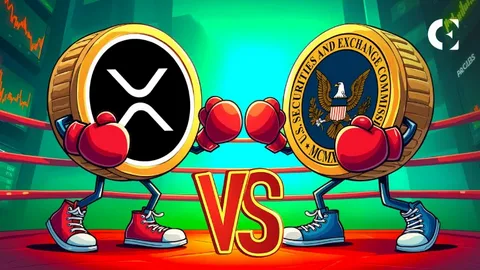
XRP vs Ripple: Why Are These Names Confused?
The XRP vs Ripple question is common because the three names share a long history. XRP and its ledger launched in 2012, and the company now known as Ripple was established that same year. News stories have sometimes used “Ripple” as shorthand for the cryptocurrency, even though that wording is inaccurate.
Imagine a railway system: XRP is the asset being moved, XRPL is the network that moves and records it, and Ripple is a company developing services that may use that network. The analogy is imperfect, but it makes the distinction easier to remember.
This separation matters when reading claims about payment partnerships, cryptocurrency adoption or price movements. A Ripple product announcement does not automatically mean every customer uses XRP, and a successful XRPL application does not necessarily involve Ripple.
XRP vs Ripple vs XRP Ledger: Side-by-Side Comparison
| Feature | XRP | Ripple | XRP Ledger (XRPL) |
|---|---|---|---|
| What is it? | Native digital asset | Private technology company | Public blockchain network |
| Main purpose | Transfer value, pay fees, provide liquidity | Build financial and digital-asset solutions | Validate and record transactions |
| Who can access it? | Users with compatible wallets or services | Customers and partners of its products | Anyone subject to their local laws and access constraints |
| Ownership | Held by wallet users, businesses and others | Owned by its shareholders | Not owned by a single company |
| Can you purchase it? | Yes, where legally available on markets | Not as a public stock on a regular exchange | No; it is a network, not a stock or coin |
| How it relates to fees | Used to pay and burn network fees | May charge for its business services | Enforces transaction fee rules |
| Does it have validators? | No; XRP is an asset | Can operate or support network infrastructure | Yes; validators participate in consensus |
The key takeaway: when someone says they “invested in Ripple,” check whether they actually mean they bought XRP. These are very different economic exposures.
What Is XRP, and What Is It Used For?
XRP is the XRP Ledger's native digital currency. People can send it between XRPL accounts without needing to use a Ripple application. A wallet controls the credentials that authorize transfers, while the ledger records account balances and transaction results.
Its main technical functions are transferring value, covering network transaction fees and serving as a potential bridge between other assets. For example, a payment path may exchange one currency into XRP and then XRP into another currency when liquidity and pricing make that route useful. Actual outcomes depend on market spreads and available counterparties.
The original 100 billion XRP were created at the ledger's inception; new XRP is not produced through mining. Network fees destroy small amounts of XRP, but that feature alone does not predict future prices. XRP remains a volatile market asset, not a guaranteed store of value.
What Is Ripple, and How Does the Company Work?
Ripple is a privately held financial technology company that develops infrastructure for payments, digital asset custody, stablecoins and related institutional uses. Its products and commercial arrangements are separate from the rules of the public XRP Ledger.
Ripple has historically built products that use XRP for certain liquidity or cross-border transfer workflows. However, Ripple also works with other assets and technologies, including its RLUSD stablecoin. It is therefore inaccurate to assume that every Ripple partnership or payment processes XRP.
Ripple holds XRP and contributes to the broader XRPL ecosystem, but it is only one participant. Owning XRP does not grant shareholder rights, dividends, voting rights in Ripple or a claim on Ripple's revenue. The company’s business performance and the market price of XRP should be evaluated separately.
What Is the XRP Ledger (XRPL)?
The XRP Ledger is an open-source, public layer-1 blockchain. It stores account information, processes transfers and supports financial applications. Independent users and organizations can run infrastructure, build applications or use the network without opening a Ripple account.
Unlike Bitcoin's proof-of-work model, XRPL uses a validator-based consensus protocol. Validators exchange proposals and agree on the sequence and outcome of transactions. Validated ledgers typically settle in roughly three to five seconds, although exchanges and payment providers may take longer to credit funds.
XRPL also offers a native decentralized exchange and support for issued assets. These features make the ledger broader than the XRP coin alone. As with any public blockchain, its governance, validator-list choices, software updates and real-world adoption deserve independent assessment.
Does Ripple Own or Control XRP and the XRP Ledger?
No single company owns the public XRP Ledger or every XRP unit. Ripple owns the XRP held in its own accounts and can decide how to use those holdings within applicable rules. Other holders control their own XRP; the network's rules determine whether transactions are valid.
It is also too simplistic to claim that Ripple has no influence. Ripple has historically held a significant XRP balance, funded development and participated in the ecosystem. Its actions may affect public expectations or market conditions, even though it cannot simply rewrite another user's balance on its own.
The important distinction is between ownership of a company, ownership of an asset and influence over an open-source network. These are different forms of control. If decentralization is important to your decision, study validator participation and network governance rather than relying on marketing labels.
How Do XRP Ledger Transactions and Fees Work?
To transfer XRP, a wallet signs a transaction with an authorized private key and submits it to the XRPL network. Servers relay the request; validators work toward agreement; and the transaction is recorded when a ledger is validated. A successful on-ledger result is different from an exchange approving a deposit.
Each transaction carries a small XRP network fee intended primarily to deter spam. The fee is burned rather than paid to miners or validators. Fees can vary according to network load or transaction characteristics, so check the amount displayed by a reliable wallet before signing.
An XRPL account also has an XRP reserve requirement, distinct from the transaction fee. More importantly, buying or sending XRP through an exchange can involve trading spreads, withdrawal charges or provider fees. Low network costs do not necessarily make an entire international payment inexpensive.
Real-World Example: XRP vs Ripple in a Cross-Border Payment
Consider a business that wants to send funds internationally. A payment provider might use Ripple's commercial payment technology, and a particular route might use XRP as an intermediary asset. If XRP is used on XRPL, the blockchain records the relevant digital-asset movements.
But another provider could send XRP directly over the XRP Ledger without being a Ripple customer. Equally, a Ripple service may operate using a stablecoin, fiat currency or another arrangement that does not require XRP. These scenarios demonstrate why company adoption statistics cannot be treated as direct evidence of XRP demand.
For a fair cost comparison, examine the final amount received, foreign-exchange spread, liquidity, intermediary charges, compliance checks and time to access the funds. A fast blockchain transfer is only one part of an end-to-end payment.
Why Do Ripple's XRP Holdings and Escrow Matter?
At the XRP Ledger's launch, its founders created 100 billion XRP. A large allocation was subsequently gifted to the company that became Ripple. Ripple later placed substantial holdings into on-ledger escrow contracts that release XRP according to predefined conditions.
Escrow does not mean all released XRP is immediately sold on the market. Released balances may be retained, used or re-escrowed. Nevertheless, Ripple's holdings and distributions matter to people analyzing token concentration, potential supply pressure and market narratives.
Do not rely on an old “circulating supply” screenshot as a current figure. For a timely assessment, compare Ripple's latest XRP holdings disclosures with public ledger data, and distinguish escrowed XRP, Ripple-controlled available XRP and holdings owned by everyone else.
Is Buying XRP the Same as Investing in Ripple?
No. Purchasing XRP provides exposure to the cryptocurrency's market price and the rights associated with holding that digital asset. It does not purchase company equity, grant participation in Ripple profits or provide a legal claim on the firm's commercial contracts.
For example, a positive announcement by Ripple might influence sentiment toward XRP, yet there is no fixed formula connecting Ripple's revenue to XRP's value. Conversely, XRPL activity can grow through unrelated developers without generating any specific financial payout for holders.
Anyone researching XRP vs Ripple from an investment perspective should separately examine asset volatility, supply concentration, market liquidity, exchange access, security and local legal or tax treatment. There is no assured return from either the technology's utility or a company's success.
What Risks Should You Understand Before Using XRP?
Price and liquidity risk
XRP can rise or fall sharply, sometimes over short periods. Cross-border use cases do not eliminate volatility, and large trades can face slippage when order-book liquidity is thin.
Wallet and transfer risk
Incorrect addresses, missing destination tags, malicious wallet applications and stolen keys can cause permanent losses. Exchange deposits may require extra information beyond the destination address.
Counterparty and regulatory risk
Trading venues, custodians and payment providers introduce their own solvency, cybersecurity and withdrawal risks. Regulations and taxes vary across India, the United States and Europe and can change. Always verify current official guidance for your jurisdiction.
How to Research XRP, Ripple and XRPL Correctly
Start by identifying the exact claim: is it about XRP's price or supply, Ripple's business, or development on the XRP Ledger? Then locate a primary source suited to that question. Network data should be checked on XRPL documentation and public explorers; company announcements should be traced to Ripple's official disclosures.
Next, examine practical conditions. Is a product actually available in your country? Does it require XRP? Are quoted transaction costs network-only or all-in? Who holds the private keys? How does the provider handle failed transfers, customer support and withdrawals?
The Shivamm Wealth Legacy Learning Hub organizes further digital-asset education. For basic terminology, continue with our What Is XRP? guide, and review our Risk Disclosure before using third-party services.
Frequently Asked Questions
Are Ripple and XRP the same thing?
No. Ripple is a private financial technology company; XRP is a cryptocurrency native to the XRP Ledger.
Is XRP Ledger owned by Ripple?
No. XRPL is an open-source public blockchain, although Ripple holds XRP and contributes development work to the ecosystem.
Can XRP exist without Ripple?
Yes. XRP transactions depend on the operation and consensus of the XRPL network, not on an individual user having a Ripple account. Future operation would still depend on participants maintaining the network.
Does every Ripple transaction use XRP?
No. Ripple offers multiple products and assets; the technology and settlement route determine whether XRP is used.
Does buying XRP give me shares in Ripple?
No. Holding a digital token does not make you a shareholder in the private company.
Is XRPL proof of stake or proof of work?
Neither. It has its own validator-based consensus protocol and does not need mining or native staking rewards to validate ledgers.
Are XRP transfers free?
No. XRPL burns small XRP transaction fees; exchanges and payment services may apply additional charges.
Conclusion: The Difference Between XRP, Ripple and XRPL
The simplest way to resolve XRP vs Ripple is to separate asset, business and infrastructure. XRP is the native cryptocurrency; Ripple is a company creating financial technology; and the XRP Ledger is the open-source network that records XRP transactions and supports other digital-asset applications.
These three parts are related but not interchangeable. A Ripple partnership does not guarantee XRP usage; owning XRP does not mean owning Ripple; and building on XRPL does not require becoming a Ripple customer. Understanding those boundaries makes news, payment claims and investment discussions easier to assess.
For further independent reading, consult the primary sources below and check their latest updates before acting on time-sensitive information.